Rock Crusher for Sale: Tracked & Portable Crushing Plants
What is a rock crusher for sale used for?
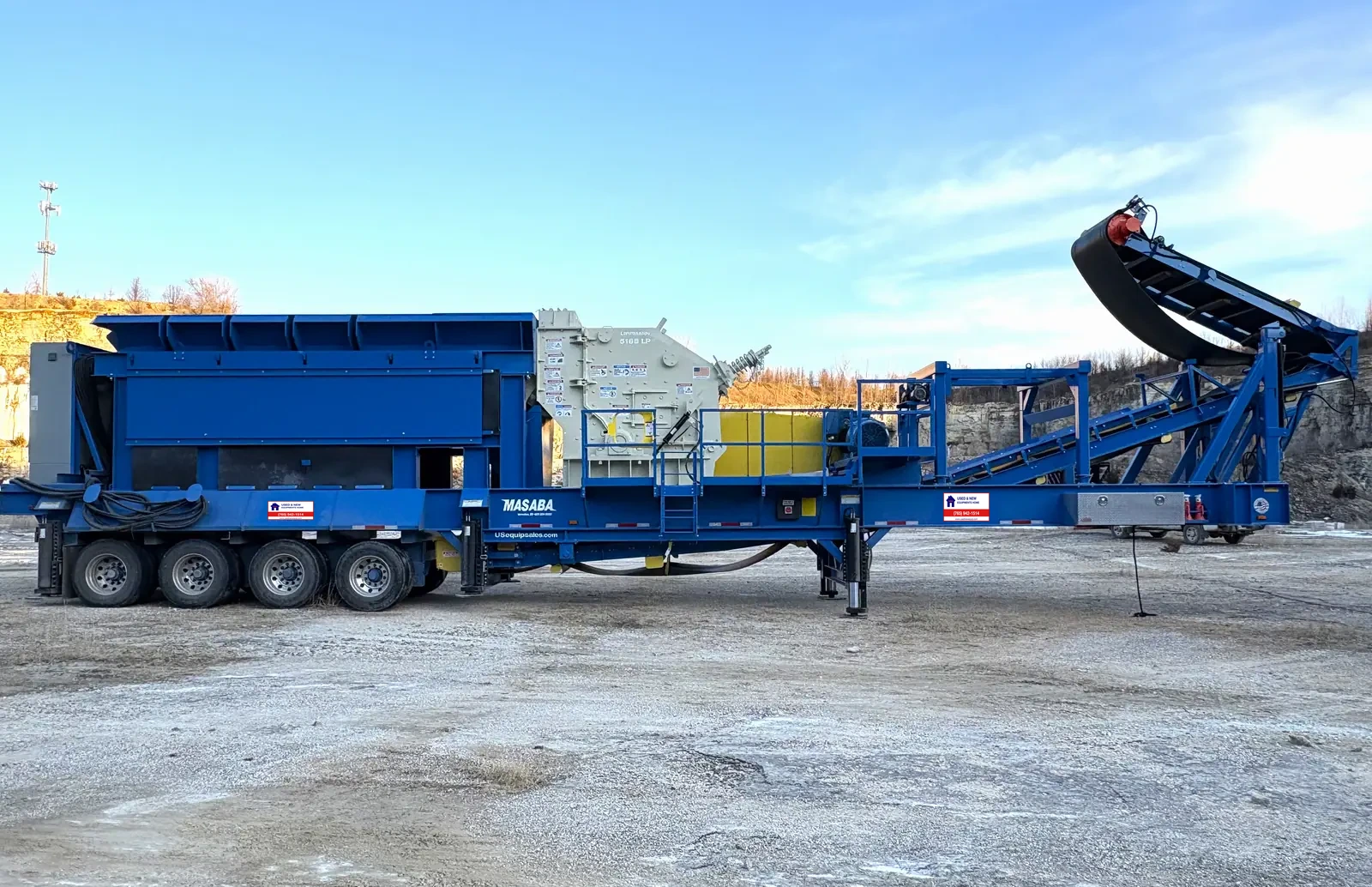
Last updated:A rock crusher for sale is a heavy-duty tracked or wheeled machine that reduces quarry rock, river gravel, concrete, and asphalt into graded aggregate products on site. Contractors choose between primary jaw crushers, high-reduction impact crushers, and secondary cone crushers based on material hardness, feed size, and target gradation.
Choosing the Right Rock Crusher for Sale for Your Operation
Finding the right rock crusher for sale starts with matching your crushing chamber to the hardness, abrasiveness, and feed size of your material. Used & New Equipments Home supplies new and used rock crushing equipment from our Lemont, Illinois headquarters and yards in Iowa, Wisconsin, and Missouri. As an authorized McCloskey International and Lippmann dealer—with additional inventory from Masaba, Komplet, Astec, and Metso—we help aggregate producers, demolition contractors, and site-prep crews compare mobile rock crushers, verify wear-part condition, and keep crushing spreads running across 13 Midwest states.
Who Should Buy Mobile Rock Crushing Equipment
- Quarry and gravel pit operators producing primary shot-rock reduction and multi-stage state-spec aggregate gradations.
- Demolition and recycling contractors turning reinforced concrete slabs and asphalt pavement into reusable road base on site.
- Civil, excavation, and highway contractors who want portable rock crusher for sale units to cut dump fees and haul-truck cycles.
- Regional producers expanding capacity with inspected used rock crusher for sale machines backed by local parts and field service.
Rock Crusher Types Compared: Jaw vs. Impact vs. Cone
| Crusher Type | Crushing Action | Best Feed Material | Typical Stage | Typical Product Shape |
|---|---|---|---|---|
| Jaw Crusher | Compression between fixed and moving manganese dies | Hard blasted rock, granite, boulders, reinforced concrete | Primary | Coarse 2–8 in. intermediate feed |
| Impact Crusher (HSI) | High-speed rotor and blow bars against impact aprons | Concrete, asphalt, limestone, soft-to-medium rock | Primary / Secondary | Cubical, well-graded road base |
| Cone Crusher | Compression between gyrating mantle and concave liner | Pre-crushed hard abrasive stone, trap rock, gravel | Secondary / Tertiary | Uniform cubical chips and spec stone |
| Compact Tracked Crusher | Compact jaw or impact chamber on small crawler tracks | Urban demolition concrete, brick, tight-site rubble | Primary / Single-pass | Contractor base and trench backfill |
Key Specifications to Compare Before Buying Crusher Machinery
Evaluating any stone crusher machine for sale goes beyond peak advertised tonnage. Actual hourly output depends on feed size distribution, moisture, clay content, closed-side setting (CSS), and whether material is pre-scalped ahead of the chamber. Check feed opening dimensions first: keeping your largest feed chunk around 80 percent of the inlet opening prevents bridging and keeps the feeder running steadily.
Next, compare transport weight and dimensions against your hauling permits and lowboy fleet. Tracked mobile rock crushers walk around the pit under wireless remote control and set up quickly, whereas wheeled portable plants travel between distant quarries by road. Also verify engine service access, hydraulic CSS adjustment, dust suppression spray bars, and overband magnet options if you recycle steel-reinforced concrete.
New vs. Used Rock Crusher for Sale Considerations
Choosing between a new gravel crusher for sale and a used unit comes down to annual operating hours, uptime requirements, and capital budget. New machines from authorized lines like McCloskey and Lippmann include factory warranty coverage, current emissions compliance, modern telemetry, and zero wear on manganese liners, conveyor belting, and track chains.
A well-maintained used rock crusher for sale lowers upfront investment and can get a spread working immediately when factory lead times are long. Before quoting any used unit, our 28 service technicians inspect liner thickness, toggle and bearing clearances, main frame welds, hydraulic pressures, and undercarriage wear so you receive a clear mechanical picture before delivery.
Rental, Financing, Parts, and Midwest Field Support
Crushing equipment only earns money while material is flowing across the main belt. Used & New Equipments Home stocks over 30,000 parts—including jaw dies, blow bars, cone mantles, screen media, belts, and filters—and supports customers Monday through Saturday with field service and shop rebuilds out of Illinois, Iowa, Wisconsin, and Missouri.
If you want to prove a machine on your own material first, you can compare published weekly and monthly rates on our rock crusher rental fleet before committing to a purchase. Our financing partners—including Wells Fargo, DLL, BOK, Northland Capital, Ridgestone, and Union Capital Associates—offer structured plans on new and used machinery. Call (765) 942-1514 for unit availability and a delivered quote.
Rock Crusher for Sale: Frequently Asked Questions
How much does a rock crusher for sale cost?
Purchase pricing depends on crusher type (jaw, impact, or cone), capacity class, new versus used condition, engine hours, and options like recirculating screens or magnets. Sale prices at Used & New Equipments Home are quoted directly by phone or written quote so you get current availability and freight. Call (765) 942-1514 for pricing on any unit in stock.
Which rock crusher type is best for hard abrasive stone vs. concrete?
Compression crushers—primary jaw crushers paired with secondary cone crushers—deliver the lowest wear cost per ton in hard, abrasive stone such as granite or quartzite. Horizontal shaft impact crushers excel in recycled concrete, asphalt, and limestone, delivering higher reduction ratios and cubical shape in a single pass.
Can I rent a rock crusher before buying one?
Yes. Used & New Equipments Home maintains a Midwest rental fleet of tracked jaw, impact, and cone crushers with published weekly and monthly rates based on a 40-hour week and 176-hour month. Renting lets your crew verify output and product shape on your material before purchasing, and rent-to-own options can be discussed with our team.
What should I check when buying a used rock crusher for sale?
Inspect wear-liner remaining life (jaw dies, cheek plates, blow bars, or cone liners), chamber frame and weld integrity, main shaft bearing play, feeder pan liners, conveyor belt splices, and hydraulic hoses. Review engine hours and service logs, and confirm local parts availability for wear components before committing to a used plant.
Where does Used & New Equipments Home deliver and service crushers?
We operate from our headquarters in Lemont, Illinois, an office in Bondurant, Iowa, and yards in Waupaca, Wisconsin and Jasper and Maryland Heights, Missouri. Our in-house heavy haul team and 28 field technicians support customers across 13 Midwest states, including Illinois, Iowa, Wisconsin, Missouri, Indiana, Michigan, Minnesota, and the Dakotas.